Event recap: EDFI Autumn Policy Exchange on SFDR 2.0
Clear consensus reached: SFDR 2.0 must preserve credibility while remaining workable for the markets where sustainable finance can make the greatest difference.
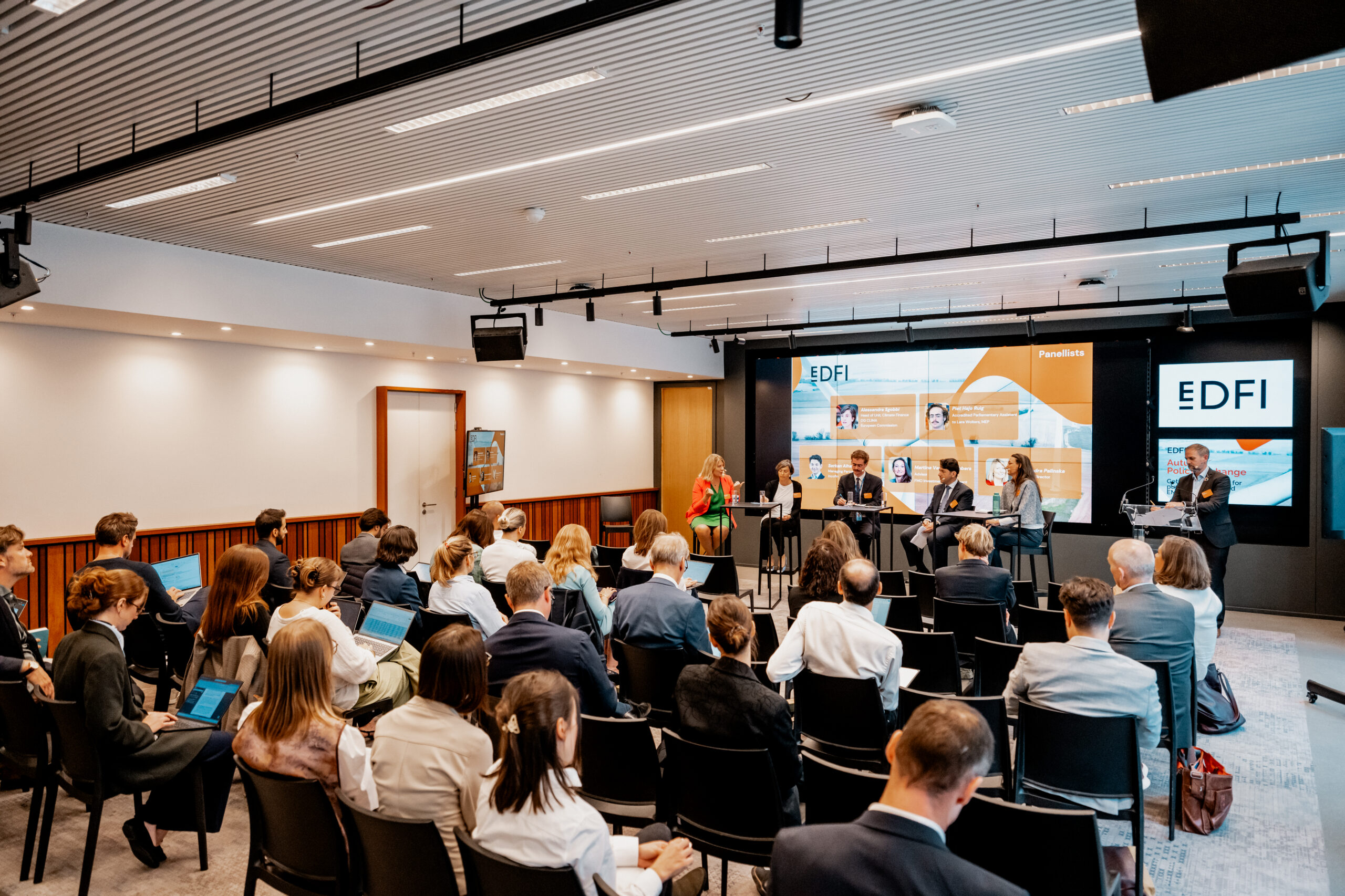
BRUSSELS, 2 October 2026—Smarter rules are needed to make the revision of SFDR effective for European DFIs and other investors financing sustainable development in emerging and developing markets.
That was the conclusion some 50 participants came away with at a 24 September EDFI-hosted event on SFDR 2.0. That message resonated among participants who represented EU institutions, development finance institutions, impact investors, and selected market actors on hand for the EDFI Autumn Policy Exchange in Brussels. Together, they explored how the next Sustainable Finance Disclosure Regulation framework can better support DFIs and investment in emerging markets and developing economies.
Consensus: preserve SFDR 2.0 credibility, keep it workable for markets where sustainable finance can make big, positive impact
Under the theme “Getting SFDR 2.0 fit for purpose for DFIs and EMDE investment”, the event led to a wide consensus among attendees that SFDR 2.0 must preserve credibility while remaining workable for the markets where sustainable finance can make the greatest difference. While SFDR should be celebrated for what it has achieved so far, its successor should retain those gains—through clear product categories, meaningful disclosures, and strong safeguards against greenwashing. A framework designed mainly around European data availability, taxonomies, and transition pathways, however, risks unintentionally diverting capital from high-impact investments elsewhere.
EDFI CEO David Kuijper (photo below) said:“Europe must start structuring its frameworks and regulations in light of its role as a global power, not in light of its role as an internal market creator.”
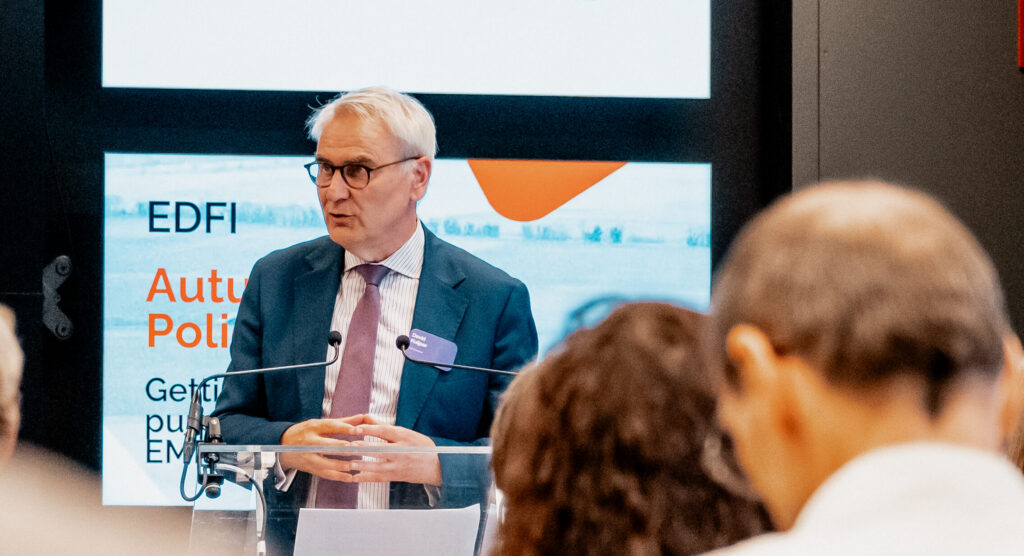
EDFI CEO David Kuijper speaking at the EDFI Autumn Exchange event on 25 September 2026.
Main takeaways from speakers and panellists:
- Credibility & capital mobilisation must go together. Participants broadly agreed challenge lies not with choosing between preventing greenwashing & mobilising capital but designing a framework that hits both aims at the same time.
- Global applicability matters. To support sustainable investment beyond Europe, SFDR 2.0 must work across different market realities. Attendees stressed the importance of internationally recognised frameworks, locally applicable taxonomies, and different transition pathways, rather than relying just on EU-specific reference points, laws, data, and standards.
- Transition Finance proves critical. The proposed Transition category was broadly welcomed. Participants stressed it should recognise credible transition pathways & real-economy progress while keeping robust safeguards against greenwashing.
- Social objectives deserve greater attention. Several speakers noted need for stronger recognition of social outcomes, including financial inclusion, livelihoods, resilience, quality employment, and access to essential services.
- Continuous dialogue needed. Broad support for continued engagement between policymakers and practitioners, such as mechanisms that allow investors active in EMDEs to contribute practical experience and implementation feedback.
SFDR matters in Europe, and beyond
SFDR matters beyond Europe as DFIs and other investors in emerging markets and developing economies often work in settings with less data, different laws, and distinct paths towards a low-carbon economy. High-impact investments may struggle to meet requirements designed mainly for mature EU markets.
The event was designed to build on the April release of the EDFI position paper on SFDR 2.0, discussions held in June at the SPTF SIWG/FIEC meeting in Amsterdam, and the recent EDFI-produced Open Tuning podcast dedicated to the topic.
EDFI notes in its paper that policy should not weaken rules against greenwashing. Instead, the updated version, called “SFDR 2.0”, should protect trust in sustainable finance and improve transparency. It should also avoid situations whereby capital becomes blocked from reaching EMDE’s businesses and projects that can support climate goals, jobs, and wider development.
Alessandra Sgobbi, Head of Unit, Climate Finance, DG CLIMA, European Commission, added: “We hope the framework is clearer, more predictable, and preserves environmental integrity while allowing greater flexibility in demonstrating how investments fit into the different categories, but does so in a manner that remains credible.”
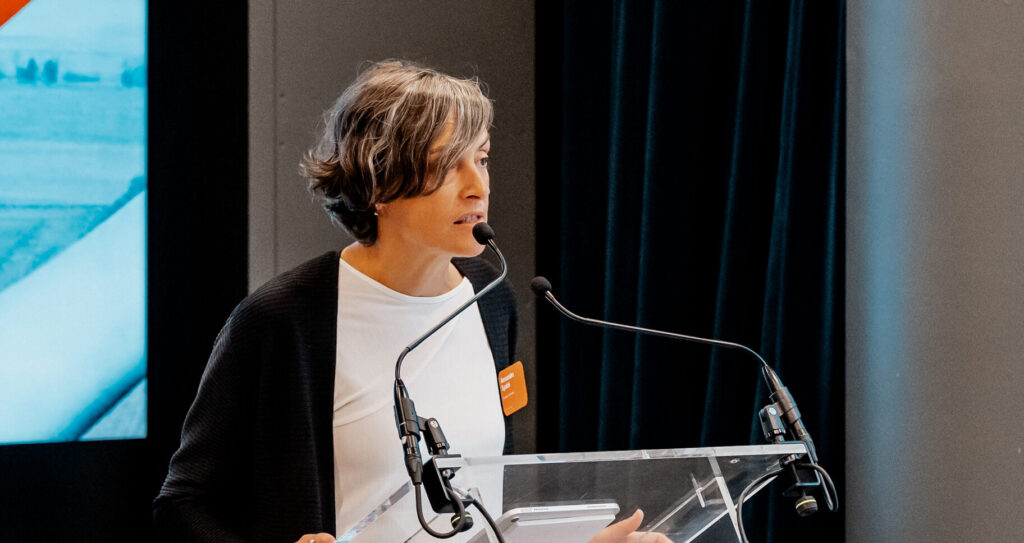
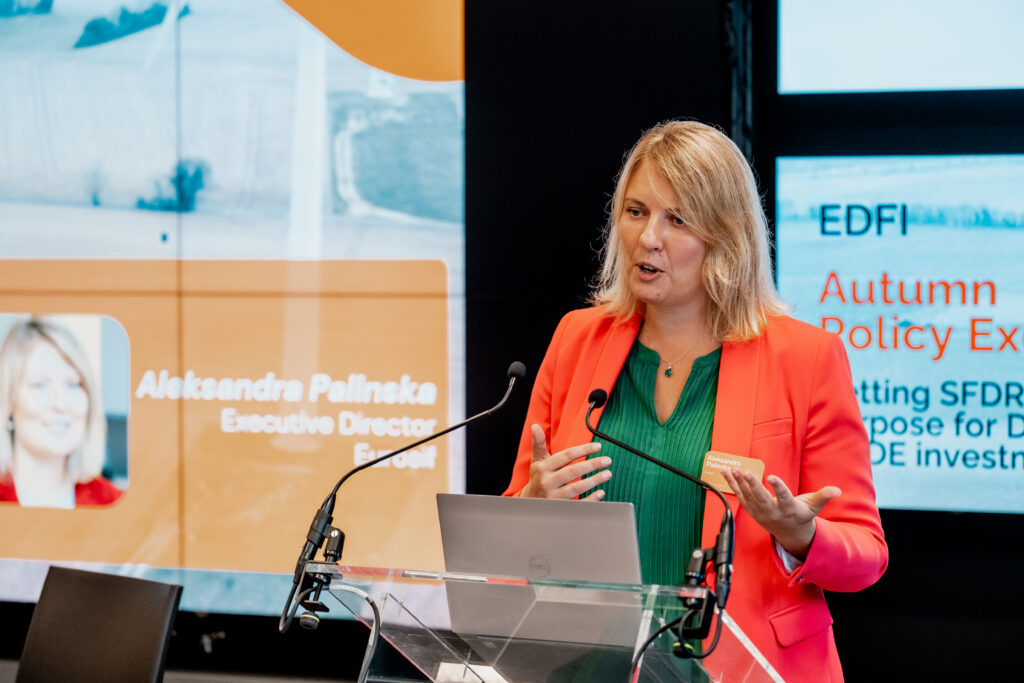
Photos above (left to right): Alessandra Sgobbi, Head of Unit, Sustainable Finance, DG CLIMA, European Commission; Aleksandra Palinska, Executive Director, Eurosif,
The overall conclusions present food for thought that SFDR 2.0 must remain credible, while becoming sufficiently practical and globally applicable to support sustainable and transition investment in EMDEs.
The final SFDR 2.0 design will be consequential on many fronts, not only for disclosures and product labelling, but also for capital mobilisation, portfolio construction, and Europe’s long-term economic partnerships.
Joining Kuijper and Sgobbi as a keynote speaker, Aleksandra Palinska, Executive Director, Eurosif (photo: above, right), noted: “The criteria underpinning the new categories need to be robust, credible, clear and usable, while properly reflecting different types of investments, including private markets, real assets and investments in developing economies.”
Read speech summary from Ms. Palinska on LinkedIn.
Keynotes explored proposed framework potential barriers
The Autumn Policy Exchange explored where the proposed framework may create such barriers. The session began with keynote interventions from the European Commission, EDFI Association, the Social Performance Task Force (SPTF) network and Eurosif. These perspectives then fed into a panel discussion with policymakers, DFIs and impact investors focussed on the practical implications of SFDR 2.0 for EMDE investment and private capital mobilisation.
Speaker Paola D’Angelo (picture follows), Managing Director, SPTF Europe (See summary on her LinkedIn post) said: “The objective is not the reporting in itself, but improving people’s lives and delivering meaningful social and environmental outcomes. Regulation should help channel capital where it is needed, while remaining operable and usable for those applying it on the ground.”
See Ms. D’ Angelo’s related LinkedIn posts with speech summary.

Paola D’Angelo, Managing Director, SPTF Europe, speaks during Part 1 of the EDFI Autumn Exchange on the review of SFDR.
Event panel: Debate on risks in policy formation
An event panel addressed tensions in the policy debate, moderated by Marko Berglund, Head of Impact, Finnfund, and featuring Mesdames Palinska and Sgobbi alongside:
- Martine van Aalst-Ebbers, Advisor, FMO Investment Management (See her podcast interview);
- Piet Ruig, Accredited Parliamentary Assistant to Lara Wolters, European Parliament; and
- Serkan Alhan, Managing Partner, Incofin.
The panel explored tensions arising in the SFDR 2.0 policy debate. For example, greenwashing vs. capital mobilisation was deemed one of the single biggest risks to getting SFDR wrong. During the exchange, policymakers pointed to the risk of greenwashing leading to a loss of credibility and loss of transparency. Meantime DFIs worry the exclusion of high-impact EMDE investments means capital not reaching the real economy where it can make the biggest change. In addition, EU-centric barriers such as EU laws and EU Taxonomy loom large in the revision process, including whether greater recognition should be given to locally applicable taxonomies and internationally recognised sustainability frameworks such as the IFC Performance Standards and other standards commonly used by DFIs and MDBs.
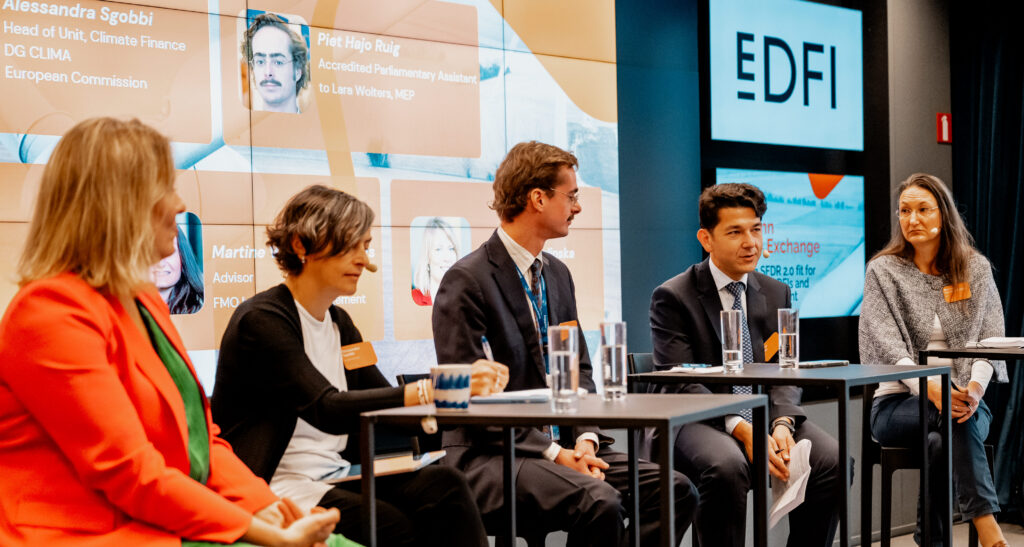
Part 2 panel (left to right): Aleksandra Palinska, Eurosif; Alessandra Sgobbi, European Commission; Piet Ruig, APA, European Parliament; Serkan Alhan, Incofin; Martine van Aalst-Ebbers, FMO Investment Management.
Performance Standards and other standards commonly used by DFIs and MDBs
A central question posed covered current proposals, with exchange on the most practical adjustments to make SFDR 2.0 more usable for EMDE investors without weakening its integrity. One possible tweak discussed is recognition of use-of-proceeds beyond bonds such as ring-fenced loans supporting transition activities through local financial institutions.
Kuijper concluded: “SFDR has been extremely useful in improving transparency. What we need now is a framework that combines sustainability with credibility, while remaining workable across global markets and different stages of transition.”
See more information at the EDFI Autumn Policy Exchange event page
Listen: EDFI Podcast on SFDR on Spotify | YouTube
Read: EDFI Policy Paper on SFDR
Explore: Event photos